Skip to content
Portafilter Co

Machines · Espresso Machines

Best PID espresso machines

A PID holds brew water at a number you set instead of letting a thermostat hunt around it. Five machines that publish one, ranked on what their PID actually controls - and the cheapest machine on this site that has one at all.

By Stephen V.Updated How we pick
#ad

We earn a commission when you buy through our Amazon links, at no extra cost to you. It never changes a verdict, and we say so when the cheaper product is the better buy. How this works.

Our pick is the Breville Barista Pro— the best balance of a stable brew temperature, near-instant heat-up and a grinder in the same box, for someone who wants to steam their own milk. If you want temperature you can actually dial to a figure and brew while you steam, the Breville Dual Boiler is the machine; if you want commercial bones with that same control, the Rancilio Silvia Pro X. And the budget pick is the Breville Bambino: the cheapest machine on this site with published digital temperature control, which is the whole reason it punches far above a thermostat-only machine at the same money.

Before the picks, what the spec means — because “PID” is printed on a lot of boxes and governs very different things inside them.

What a PID is. A plain thermostat is a switch: it turns the heater on below a threshold and off above it, so the water temperature saws up and down across a range. A PID is a controller that reads the temperature continuously and modulates the heater using how far off target it is, how fast it is moving and how long it has been drifting. The practical result is a narrower band around the number rather than a swing through it. That matters for espresso because the extraction window is narrow: the same coffee, dose and grind pulled a few degrees apart tastes measurably different, and sour or bitter espresso is often a temperature story rather than a grind one.

What the PID is attached to is the real question.This is where the spec sheets diverge and where this page ranks. On the Breville Barista Pro and Barista Express Impress, the PID governs a ThermoJet or ThermoCoil heater that makes brew water on demand — fast, stable at the set point, and not something you choose a number for. On the Breville Dual Boiler and the Rancilio Silvia Pro X, independent PIDs govern two separate boilers, so brew temperature is set to a figure you pick and steam pressure is held separately at the same time. On heat-exchanger machines like the Diletta Bello+, the PID governs a single large boiler feeding a heat exchanger. Same three letters, three different amounts of control.

What a PID does not do.It does not grind your coffee, level your puck or choose your dose, and it will not rescue a shot that is channeling. If your espresso is inconsistent from shot to shot with the same beans, the grinder is a far more likely culprit than temperature — best grinders for espresso is the page to read before you upgrade a machine for its controller. A PID also does not replace warm-up: a brass group head still needs to come up to temperature, PID or not.

How we ranked.First, whether the PID governs a figure you can set or a target the machine holds for you. Second, whether brewing and steaming are independent. Third, what else arrives in the box at the price — a grinder is worth a lot more to most buyers than a tenth of a degree. If you would rather shop by boiler count, the single boiler and dual boiler roundups cut the same field a different way.

The short answer

Quick picks

#ProductBest forScorePrice
01
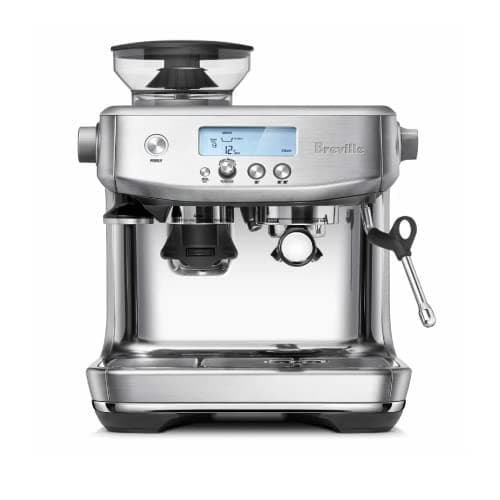
Breville Breville Barista Pro (BES878BSS)
Breville Barista Pro (BES878BSS)

The best PID machine for most people, because of what the PID is paired with rather than the controller itself. Breville's ThermoJet heater brings the machine to brew temperature in roughly three seconds and digital temperature control holds it there, which means the first shot of the morning lands where the fourth does - the most common failure of a thermostat machine that has been sitting idle. Around that you get the integrated conical burr grinder with 30 settings, the 54mm brew system and an LCD that walks you through grind, dose and shot time. You texture milk yourself on a manual wand, which is a feature if you want to learn and a chore if you do not. For the money, nothing else here gives you a stable brew temperature and a matched grinder at once.

Best overall - stable temperature plus a grinder in the box
8.4
$629.95Amazon
02
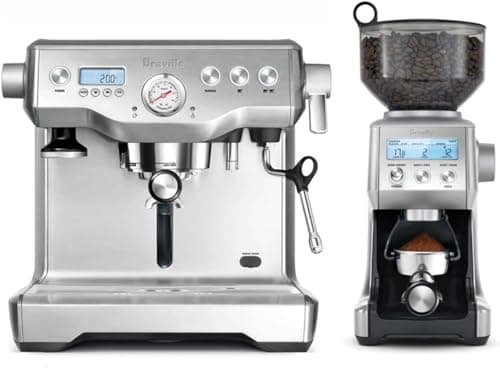
Breville Breville Dual Boiler (BEP920, with Smart Grinder Pro)
Breville Dual Boiler (BEP920, with Smart Grinder Pro)

The machine to buy if the reason you came to this page is temperature you can actually set. Two stainless boilers run on independent PIDs and the 58mm group is PID-heated too, so brew temperature is a figure you choose while steam pressure is held separately at the same time - which is what lets you pull a shot and texture milk without waiting for a single heater to change jobs. Low-pressure pre-infusion is programmable, and this bundle ships with the Smart Grinder Pro so the grinder is not an afterthought. It is plastic where a Rancilio is steel, and it is the enthusiast machine you grow into rather than a first espresso maker.

Best for brew temperature you set yourself
8.3
$1,699.95Amazon
03
Rancilio Rancilio Silvia Pro X Espresso Machine
Rancilio Silvia Pro X Espresso Machine

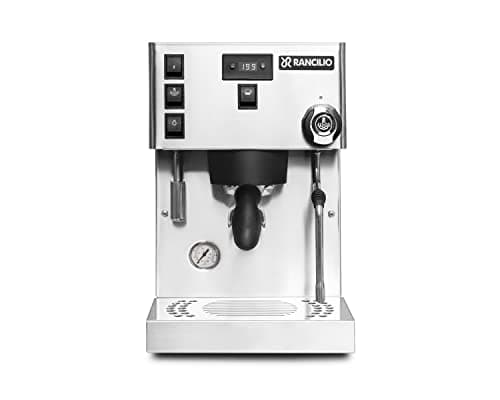
The pick if you want two PIDs inside commercial bones. A 1-litre steam boiler and a 300 ml brew boiler run on independent, to-the-degree PIDs behind a 58mm commercial portafilter, and the steam is closer to a cafe machine than anything else here. Pre-infusion is adjustable. What you are paying for over the Breville is metal, serviceability and steam power - this is a machine you maintain rather than replace - and what you give up is a grinder, a screen and any hand-holding at all. It expects you to know how to dial in and steam before you switch it on.

Best commercial build with full PID control
8.4
$2,195.00Amazon
04
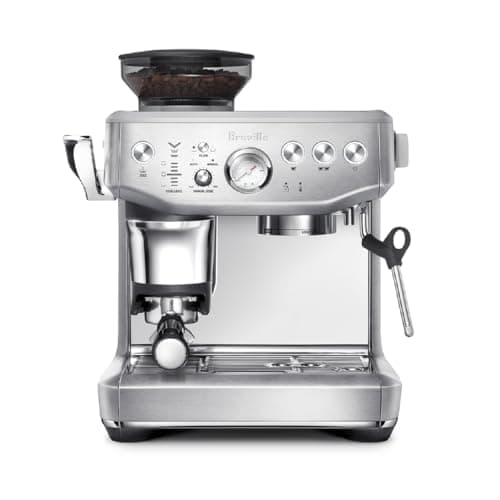
Breville Breville Barista Express Impress (BES876)
Breville Barista Express Impress (BES876)

The PID machine for someone whose shots vary because of puck prep rather than temperature. Behind the Impress dosing and assisted-tamp system - a constant tamp finished with a seven-degree twist, and intelligent dosing that corrects toward about 18 grams - sits a ThermoCoil heater held by a PID and the same 54mm brew group as the rest of the Barista line. The temperature control is the quieter half of the machine: it stops the thermostat swing, while the Impress mechanism removes the two steps beginners most often fumble. It is slower to heat than the ThermoJet Barista Pro and it does not pull a better shot, so buy it to raise the floor on your worst shots rather than the ceiling on your best.

Best for consistent puck prep behind a PID
8.1
$774.99Amazon
05
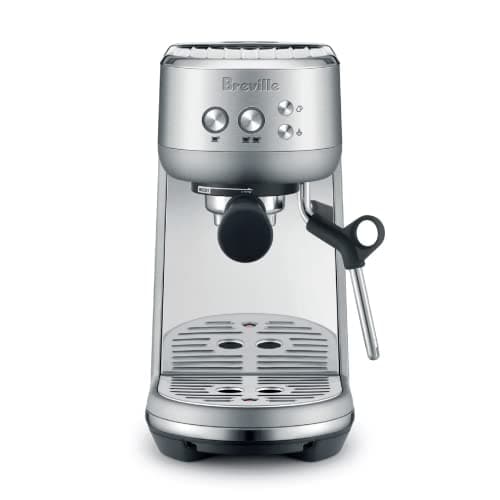
Breville Breville Bambino Espresso Machine (BES450)
Breville Bambino Espresso Machine (BES450)

The budget pick, and the cheapest machine on this site that publishes digital temperature control at all. The Bambino pairs it with ThermoJet heating, so it is at brew temperature in about three seconds from cold - which for a machine used twice a day is worth more in practice than a set point you would never change. You get real single-wall baskets, a proper manual steam wand with auto-purge, and a body about the width of a paperback. There is no grinder, and that is the honest caveat: on a semi-automatic the grinder matters as much as the machine, so budget for both. Within those limits it is the best-value temperature-controlled machine here by a long way.

Budget pick - the cheapest machine here with published PID control
8.2
$299.95Amazon

#ad · Live prices from the Amazon Product API, as of November 23, 2026. Where we have no verified live price, we show none — a gap beats a number that has rotted.

In detail

The picks, in full

01
Breville Breville Barista Pro (BES878BSS)

Best overall - stable temperature plus a grinder in the box

Breville Barista Pro (BES878BSS)

ThermoJet heating, ~3-second heat-upDigital temperature control (PID)Integrated conical burr grinder, 30 settings54mm portafilter, manual steam wand
8.4/10

The best PID machine for most people, because of what the PID is paired with rather than the controller itself. Breville's ThermoJet heater brings the machine to brew temperature in roughly three seconds and digital temperature control holds it there, which means the first shot of the morning lands where the fourth does - the most common failure of a thermostat machine that has been sitting idle. Around that you get the integrated conical burr grinder with 30 settings, the 54mm brew system and an LCD that walks you through grind, dose and shot time. You texture milk yourself on a manual wand, which is a feature if you want to learn and a chore if you do not. For the money, nothing else here gives you a stable brew temperature and a matched grinder at once.

Temperature stability
8.5
Value
9
Ease of use
9
Build & longevity
7.5
Milk performance
8

Pros

  • Near-instant heat-up means the idle-machine temperature problem does not arise
  • Grinder included, so your first shot is not bottlenecked by a cheap grinder
  • Shot-time and dose guidance on the LCD, which shortens the learning curve
  • Same 54mm brew system and espresso quality as the much pricier Barista Touch
  • Manual wand is the right tool if latte art is the goal

Cons

  • The PID target is not a number you choose - no brew-temperature set point to tune
  • 54mm baskets have a smaller accessory ecosystem than 58mm
  • Single thermoblock: you brew, then steam, rather than both at once
  • Plastic in places where a traditional machine is steel
  • Hopper-fed grinder means a little purging when you change beans

Don't buy this if…

…you want to set brew temperature to a specific figure, or brew and steam simultaneously. That is the Dual Boiler and the Silvia Pro X below, at two to four times the price.

Our full Barista Pro review covers the ThermoJet system in detail, and Barista Express vs Barista Pro is the comparison that matters most here, because the Express uses the slower ThermoCoil heater behind the same kind of temperature control.

$629.95View on Amazon

$849.9526% off

Price as of November 23, 2026. Prices change — Amazon's at checkout is the one that counts.

#ad · we may earn a commission from this link to Breville Barista Pro (BES878BSS)

02
Breville Breville Dual Boiler (BEP920, with Smart Grinder Pro)

Best for brew temperature you set yourself

Breville Dual Boiler (BEP920, with Smart Grinder Pro)

Dual stainless boilers, independent PIDPID-heated 58mm group, 22 g doseProgrammable low-pressure pre-infusionShips with Smart Grinder Pro
8.3/10

The machine to buy if the reason you came to this page is temperature you can actually set. Two stainless boilers run on independent PIDs and the 58mm group is PID-heated too, so brew temperature is a figure you choose while steam pressure is held separately at the same time - which is what lets you pull a shot and texture milk without waiting for a single heater to change jobs. Low-pressure pre-infusion is programmable, and this bundle ships with the Smart Grinder Pro so the grinder is not an afterthought. It is plastic where a Rancilio is steel, and it is the enthusiast machine you grow into rather than a first espresso maker.

Temperature stability
9.5
Value
7.5
Ease of use
7.5
Build & longevity
8
Milk performance
9

Pros

  • Brew temperature is a set point you choose, not a target the machine picks
  • True simultaneous brew and steam - the steam boiler is held independently
  • 58mm commercial basket size, so the whole accessory ecosystem fits
  • Programmable pre-infusion gives you a second variable to tune
  • Grinder included, which is unusual at this level

Cons

  • Expensive, and the single biggest jump in price on this page
  • Plastic panels and fittings where traditional machines use steel
  • Long warm-up compared with a ThermoJet machine
  • More machine than a beginner needs or will use
  • The bundled Smart Grinder Pro listing has gone in and out of stock historically

Don't buy this if…

…you make two drinks a day and do not want to learn temperature profiling. The Barista Pro pulls a very good shot for a fraction of this.

The full Breville Dual Boiler review goes through both boilers and the pre-infusion profile, and Dual Boiler vs Silvia Pro X is the head-to-head between the two genuinely dual-PID machines on this page.

$1,699.95View on Amazon

Price as of November 23, 2026. Prices change — Amazon's at checkout is the one that counts.

#ad · we may earn a commission from this link to Breville Dual Boiler (BEP920, with Smart Grinder Pro)

03
Rancilio Rancilio Silvia Pro X Espresso Machine

Best commercial build with full PID control

Rancilio Silvia Pro X Espresso Machine

1 L steam boiler + 300 ml brew boilerIndependent brew & steam PIDs, to the degree58 mm commercial portafilterAdjustable low-pressure pre-infusion
8.4/10

The pick if you want two PIDs inside commercial bones. A 1-litre steam boiler and a 300 ml brew boiler run on independent, to-the-degree PIDs behind a 58mm commercial portafilter, and the steam is closer to a cafe machine than anything else here. Pre-infusion is adjustable. What you are paying for over the Breville is metal, serviceability and steam power - this is a machine you maintain rather than replace - and what you give up is a grinder, a screen and any hand-holding at all. It expects you to know how to dial in and steam before you switch it on.

Temperature stability
9.5
Value
7
Ease of use
6.5
Build & longevity
9.5
Milk performance
9.5

Pros

  • Two independent to-the-degree PIDs, one per circuit
  • Steam power genuinely close to a commercial machine
  • Metal construction built to be serviced for a decade and more
  • 58mm commercial group and basket standard
  • Adjustable pre-infusion without a mod

Cons

  • The most expensive machine on this page by a wide margin
  • No grinder in the box, and it needs a good one
  • No automation, screen or guidance of any kind
  • Heavy and large on a domestic counter
  • Long warm-up before the group is thermally settled

Don't buy this if…

…this would be your first espresso machine. Buy the Barista Pro, learn on it, and come back here when the machine is the thing limiting you.

The full Silvia Pro X review covers both boilers and the service story, and Silvia vs Silvia Pro X is the page to read if you are deciding whether the factory PID is worth the step up from the plain Silvia.

$2,195.00View on Amazon

Price as of November 23, 2026. Prices change — Amazon's at checkout is the one that counts.

#ad · we may earn a commission from this link to Rancilio Silvia Pro X Espresso Machine

04
Breville Breville Barista Express Impress (BES876)

Best for consistent puck prep behind a PID

Breville Barista Express Impress (BES876)

ThermoCoil heater with PID controlAssisted tamp: constant pressure + 7-degree twistIntelligent dosing, corrects toward ~18 g54mm portafilter, integrated grinder, 25 settings
8.1/10

The PID machine for someone whose shots vary because of puck prep rather than temperature. Behind the Impress dosing and assisted-tamp system - a constant tamp finished with a seven-degree twist, and intelligent dosing that corrects toward about 18 grams - sits a ThermoCoil heater held by a PID and the same 54mm brew group as the rest of the Barista line. The temperature control is the quieter half of the machine: it stops the thermostat swing, while the Impress mechanism removes the two steps beginners most often fumble. It is slower to heat than the ThermoJet Barista Pro and it does not pull a better shot, so buy it to raise the floor on your worst shots rather than the ceiling on your best.

Temperature stability
8
Value
7.5
Ease of use
9.5
Build & longevity
7.5
Milk performance
8

Pros

  • Assisted tamp and dosing engineer out the most common beginner error
  • PID-held ThermoCoil keeps brew temperature steady across a session
  • Integrated grinder with dose memory
  • Same 54mm espresso system as the wider Barista range
  • A genuinely shorter learning curve than any other machine here

Cons

  • ThermoCoil is much slower to heat than the Barista Pro's ThermoJet
  • Costs more than the Barista Pro while pulling a very similar shot
  • No brew-temperature set point to choose
  • Assisted tamp is a fixed routine - little room to experiment with prep
  • Bulky footprint for a single-boiler machine

Don't buy this if…

…you already dose and tamp consistently. You are paying for a mechanism that solves a problem you have solved, and the Barista Pro heats faster for less.

Our Barista Express Impress review documents the tamp mechanism, and Barista Express vs Impress is the direct comparison with the cheaper machine it is built from.

$774.99View on Amazon

Price as of November 23, 2026. Prices change — Amazon's at checkout is the one that counts.

#ad · we may earn a commission from this link to Breville Barista Express Impress (BES876)

05
Breville Breville Bambino Espresso Machine (BES450)

Budget pick - the cheapest machine here with published PID control

Breville Bambino Espresso Machine (BES450)

ThermoJet, roughly 3-second heat-upDigital temperature control (PID)54 mm portafilter, 15-bar pumpManual steam wand with auto-purge
8.2/10

The budget pick, and the cheapest machine on this site that publishes digital temperature control at all. The Bambino pairs it with ThermoJet heating, so it is at brew temperature in about three seconds from cold - which for a machine used twice a day is worth more in practice than a set point you would never change. You get real single-wall baskets, a proper manual steam wand with auto-purge, and a body about the width of a paperback. There is no grinder, and that is the honest caveat: on a semi-automatic the grinder matters as much as the machine, so budget for both. Within those limits it is the best-value temperature-controlled machine here by a long way.

Temperature stability
8
Value
9.5
Ease of use
8.5
Build & longevity
7
Milk performance
8

Pros

  • By far the cheapest route to a temperature-controlled brew on this site
  • Three-second heat-up removes the warm-up problem entirely
  • Real single-wall baskets, so good espresso is actually possible
  • Tiny footprint - about 7.7 inches wide
  • Proper steam wand that textures milk for latte art

Cons

  • No grinder, and it needs a good one to be worth owning
  • No set point and no shot timer
  • Small drip tray and small water tank
  • Light enough to shift on the counter when you lock in the portafilter
  • Single thermoblock: brew, then steam

Don't buy this if…

…your budget has to cover the grinder too and is tight. A cheaper machine plus a better grinder beats this machine plus a bad one.

The full Bambino review covers the ThermoJet and the basket set, and Bambino vs Bambino Plus decides whether the automatic milk wand is worth the step up.

$299.95View on Amazon

Price as of November 23, 2026. Prices change — Amazon's at checkout is the one that counts.

#ad · we may earn a commission from this link to Breville Bambino Espresso Machine (BES450)

Set point versus held target: the distinction that decides this page

Two machines can both advertise PID and give you very different amounts of control. On the Breville Dual Boiler and the Rancilio Silvia Pro X you choose a brew temperature and the controller defends that figure, which is what makes temperature a variable you can deliberately change — a degree or two up for a dark roast, down for a light one. On the Barista Pro, the Impress and the Bambino, the PID holds a target Breville chose; you get the stability but not the dial. Neither is wrong. If you rotate roasts and want to profile, pay for the set point. If you drink the same beans and want the same shot every morning, the held target is the whole benefit, and the Bambino delivers it for a quarter of the money.

Where a PID genuinely changes the cup, and where it does not

The clearest real-world win is the second shot. On a thermostat machine the boiler has been cycling while you steamed milk, so shot two lands somewhere different from shot one. A PID narrows that gap. The second win is idle drift: a machine that has sat for twenty minutes and one that has just pulled a shot behave much more alike. What a PID will not do is make a coarse grind taste right, fix a channelled puck or compensate for stale coffee. Our how to dial in espresso guide is the order of operations we would actually follow: grind, dose, distribution, then temperature.

PID is not the same as a second boiler

The two specs get conflated constantly. A PID is about how precisely a heater is controlled; a second boiler is about how many jobs the machine can do at once. The Bambino has temperature control and one thermoblock, so you brew and then steam. The Silvia Pro X has two boilers and two PIDs, so it does both at the same time. If back-to-back milk drinks are the thing you actually want, read single boiler vs double boiler before you shop for controllers — that is the spec that solves it.

Retrofitting a PID, and when it is worth it

The plain Rancilio Silvia and the Gaggia Classic Evo Pro are both well known for bolt-on PID kits, which is why neither is a pick above: as sold, they are thermostat machines you temperature-surf. If you enjoy that kind of project, a second-hand Classic plus a kit is the cheapest PID espresso in existence. If you do not, factory control costs less than the kit plus your Saturday. The 58mm machines page covers what else those two platforms give you.

What to spend the rest of the money on

If a PID machine would take your whole budget, spend less on the machine. A temperature-stable brew into a badly ground puck is still a bad shot, and the best espresso setup under $1,000 page splits a fixed budget between machine and grinder in the proportions that actually produce good espresso. A scale that reads to 0.1 g is the other cheap win — best espresso scales has the picks.

How we picked

We did not lab-test this gear

Everyone in this category says they tested twenty machines. We have not pulled shots on every product here, and we say so. What we did instead: compiled the published specifications, cross-checked the manufacturer manuals, computed the running cost (wattage to energy, grams-per-shot to cost-per-cup), weighed aggregated owner reports, and scored each product against a published rubric. The scores are judgments from documented research — not measurements we took, because we do not have a test lab and we will not pretend we do. Where hands-on time would tell you more than a spec sheet, we flag it. Where a number came from someone else's work, we name them in Sources.
Questions

Frequently asked

What is the cheapest espresso machine with a PID?
On this site, the Breville Bambino. Breville publishes digital temperature control for it, and it is the least expensive machine we rank that does. It pairs that with ThermoJet heating, so it reaches brew temperature in roughly three seconds, which for a twice-a-day machine matters more than a set point most owners would never adjust. Budget for a grinder alongside it — see best espresso grinders under $300.
Is a PID worth it for home espresso?
Yes, but not as the first thing you buy. In order of how much they change the cup: the grinder, your puck prep, then temperature control. A PID mainly buys consistency - shot two matching shot one after you have steamed milk, and a machine that has been idle behaving like one that has not. If your espresso is unpredictable with the same beans and the same dose, a better grinder will fix more of it than a better controller.
Can I set the brew temperature on any PID machine?
No, and this is the most common misunderstanding about the spec. Some machines expose a set point you choose - the Breville Dual Boiler and the Rancilio Silvia Pro X on this page both do. Others use a PID to hold a target the manufacturer fixed, which includes the Barista Pro, the Barista Express Impress and the Bambino. Both are genuine PID control; only the first lets you profile temperature by roast.
Does a dual boiler always have a PID?
Not necessarily, and a PID does not imply a second boiler either. They are independent specs: one is about precision of control, the other about doing two jobs at once. The machines on this page that do both are the Breville Dual Boiler and the Silvia Pro X. Single boiler vs double boiler explains which problem each spec actually solves.
Why is the Gaggia Classic Evo Pro not on this page?
Because it does not ship with one. The Classic is the most-PID-modded machine in home espresso, but as sold it is a thermostat machine you temperature-surf, and this page ranks published factory specifications rather than what a machine can become. It is a pick on best 58mm espresso machines and on the single-boiler roundup for exactly the qualities it does have.

Keep reading

Same gear, other pages

We cover this gear elsewhere too

Receipts

Sources

We do not run a testing lab, and we do not pretend to. Where a measured number came from someone else's work, we name them and link them. Where we could not verify something, we say so on the page rather than quietly leaving it out. Read our full method.