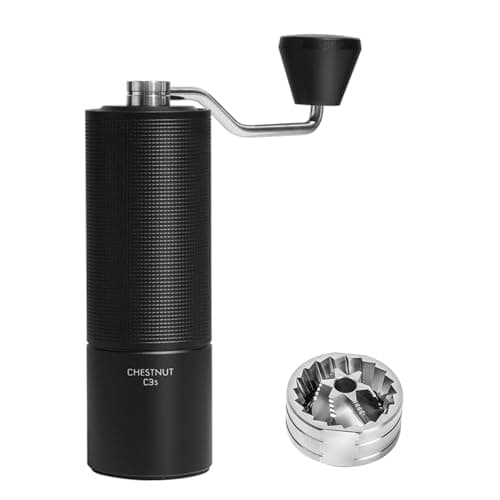
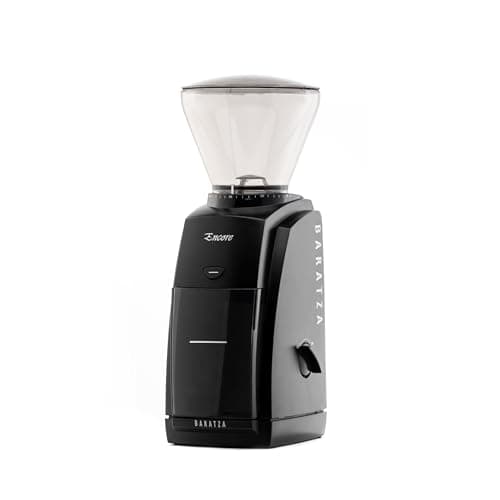
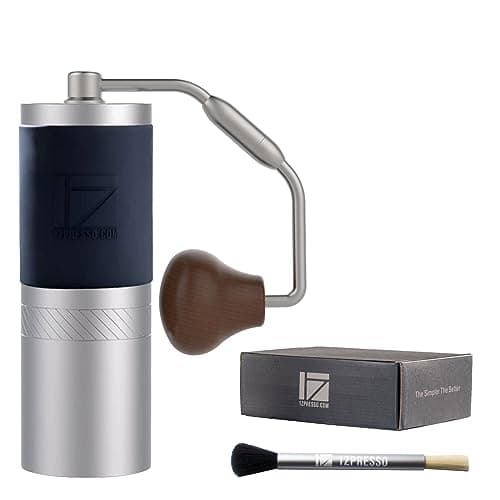
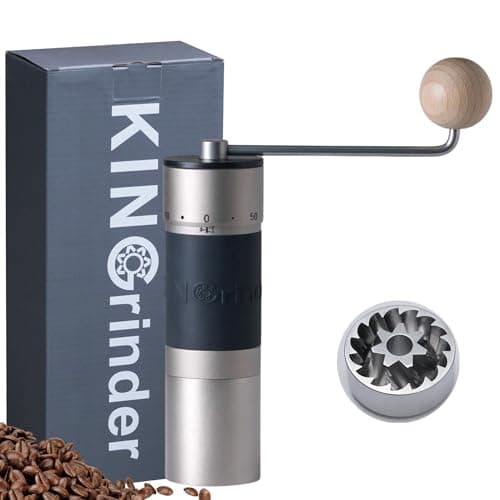
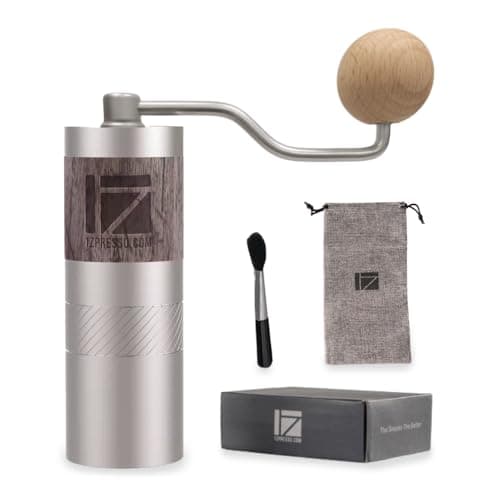
Our pick is the 1Zpresso Q2— a hand grinder small enough to fit inside the AeroPress plunger, which turns the two into a single travel kit, with the consistency to make the brewer worth carrying. The budget pick is the Timemore Chestnut C3S, which costs very little and grinds well across the AeroPress range. If you would rather not crank at all, the Baratza Encore is the electric answer.
Before the picks, the thing that makes this a different question from every other grinder page.
The AeroPress has no single grind size, and that is the whole point. It is an immersion brewer with a pressure finish, which means grind and steep time trade against each other: a fine grind with a ten-to-thirty-second steep works, a medium-fine grind at about a minute and a half works, and a coarse grind steeped for two to four minutes at a lower temperature works too. Those are three genuinely different drinks from one device, and our AeroPress grind sizeguide sets out all three. A grinder that is excellent in one narrow window — a dedicated espresso grinder, say, or a filter-only grinder — serves the AeroPress worse than a grinder that travels the whole range competently.
Which makes repeatability the top criterion, not uniformity. If you are moving between recipes, you need to get back to each setting without re-dialling by taste. A numbered dial or countable clicks is therefore worth more here than a slightly narrower particle distribution. Every pick on this page has a setting you can write down.
Dose size is the second criterion, and it is where hand grinders bite.A standard AeroPress recipe is around 15 to 18 grams, which is one of the most comfortable hand-grinding doses there is — roughly thirty seconds of easy cranking, nothing like the minute of effort an espresso dose demands. That is why hand grinders dominate this page in a way they do not dominate our espresso roundups. The AeroPress XL, though, takes a much larger dose, and at that size a 38mm burr set becomes real work — hence one pick chosen specifically for capacity.
What you do not need. Flat burrs, 64mm anything, zero retention, or a stepless collar. The AeroPress is the most forgiving brewer we rank: its paper filter and short contact time hide a multitude of grind sins, which is exactly why it is the brewer people take camping. Buy the cheapest grinder on this page that matches your dose and your patience, and spend the difference on coffee.
Pick your recipe first, then your grinder
AeroPress recipes fall into three families and they want different things from a grinder. The fine and fastrecipes — an espresso-ish grind steeped ten to thirty seconds and pressed hard — benefit from fine resolution, which is the KINGrinder K6's argument. The standard recipe, medium-fine at about a minute and a half, is what every grinder here does well. The long and coarse recipes, two to four minutes at a lower temperature, need nothing special at all. If you brew the standard recipe and always will, buy the cheapest grinder on this page. AeroPress grind size has all three with times and temperatures.
Why hand grinders win here and lose at espresso
Effort scales with both dose and fineness. A 15 to 18 gram AeroPress dose at a medium-fine setting is about thirty seconds of easy cranking — pleasant, even. An 18 gram espresso dose at a much finer setting is closer to a minute of real work, every shot. That is the entire reason our espresso roundups lean electric and this page leans manual. If your AeroPress habit grows into an espresso habit, plan on a motor: hand vs electric grinders covers the crossover point.
The AeroPress XL changes the answer
The XL takes roughly double a standard dose, and at that size the grinder question flips. Thirty-plus grams through a 38mm burr set is a genuine arm workout and a 15 to 20 gram capacity means grinding twice. If the XL is your brewer, buy either the 1Zpresso J for its 30 to 35 gram capacity and 48mm burrs, or an electric grinder and stop thinking about it. Our best AeroPress page covers which model is which.
What a grinder cannot fix about an AeroPress
The brewer is forgiving by design: a paper filter and a short contact time hide an uneven grind better than any pour-over cone does, which is exactly why it travels so well. So if your AeroPress coffee is disappointing, the grinder is not the first thing to suspect. Dose and ratio come first — coffee to water ratio— then water temperature, then freshness of the beans. A cheap burr grinder plus a weighed dose beats an expensive grinder and a scoop.
Where to go next
If you are deciding between brewers rather than grinders, AeroPress vs French press and AeroPress vs pour over are the two comparisons people actually run, and AeroPress alternatives covers the brewers people move to when the plastic chamber bothers them. For the grinder field more broadly, best hand coffee grinders ranks the manual category on its own terms.
How we picked
We did not lab-test this gear
Everyone in this category says they tested twenty machines. We have not pulled shots on every product here, and we say so. What we did instead: compiled the published specifications, cross-checked the manufacturer manuals, computed the running cost (wattage to energy, grams-per-shot to cost-per-cup), weighed aggregated owner reports, and scored each product against a published rubric. The scores are judgments from documented research — not measurements we took, because we do not have a test lab and we will not pretend we do. Where hands-on time would tell you more than a spec sheet, we flag it. Where a number came from someone else's work, we name them in Sources.