Before the alternatives, the thing being replaced, because an honest alternative page has to start there. The Technivorm Moccamaster KBGV Selectis on the Specialty Coffee Association's certified home brewer list, where its entry records a 40 oz (1.25 L) capacity, a glass carafe with a hotplate and a switch that selects a half or full carafe. Its own listing adds that it is pump-free, heats water to the correct extraction temperature, brews that full 40 oz pot in four to six minutes on a single switch, shuts off automatically after 100 minutes and carries a five-year warranty. It is a genuinely excellent machine and it is our top pick on best drip coffee makers. If you can afford it and you want one, buy it.
People look for an alternative for four reasons, and they are not interchangeable. The autocomplete for this search splits almost exactly along them: it costs too much, it has no grinder, it has plastic in it, and I need a part for mine. Pick your reason and the answer is different in each case, which is how this page is organized.
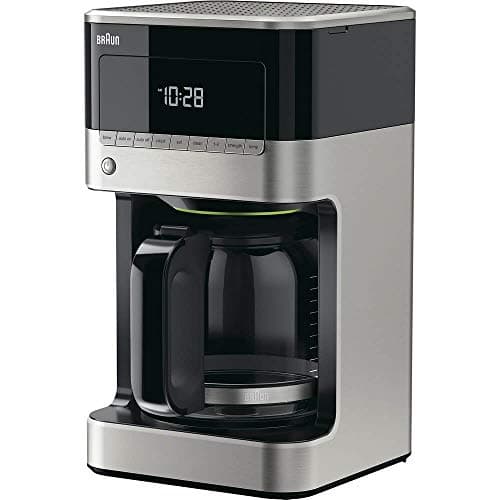
Reason one: the price.This is the most common one and the easiest to answer, as long as you are honest about what you give up. A Moccamaster's money goes into holding brew temperature and distributing water evenly over the bed, which is exactly what the SCA tests for, plus Dutch assembly, a five-year warranty and a machine built to be repaired rather than replaced. A cheap drip machine gives up the first of those and has no claim on the rest — but "cheap drip machine" covers an enormous range, and the two at the bottom of this page are the ones worth owning. The Braun BrewSense is the pick for this reason and it costs a fraction of the Moccamaster.
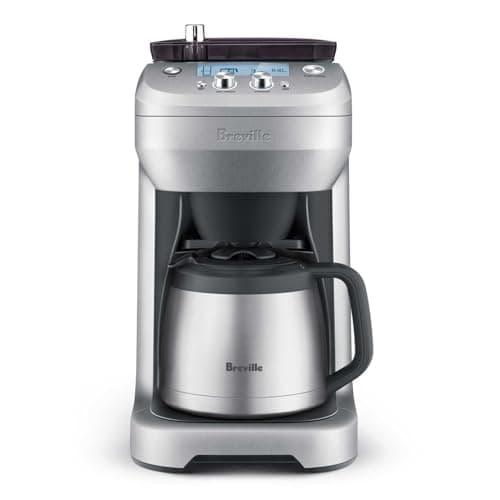
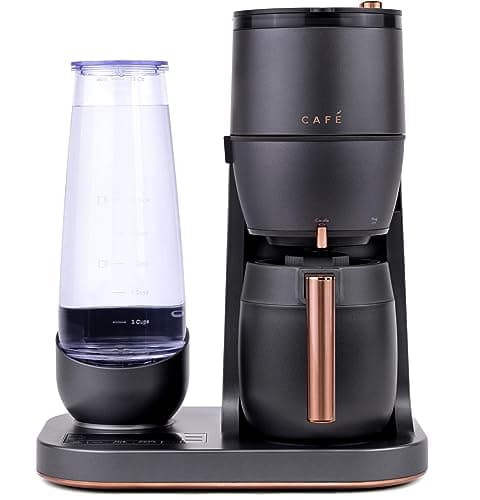
Reason two: it has no grinder, and no timer. This is the most interesting reason, because it is the one where you can genuinely come out ahead. The KBGV is a brewer, full stop: one switch, no clock, nothing that grinds. If you have been buying pre-ground to feed it, a grind-and-brew machine will improve your coffee more than the brewer upgrade ever did, because grinding to order is the single largest quality gain available at any price. Three picks below do this, and one of them — the Café Specialty Grind and Brew— also holds SCA certification, which makes it the only machine on this page that keeps the Moccamaster's brewing credential and adds the grinder, the programmable timer and a thermal carafe. It is our overall pick for that reason. See also best coffee makers with a grinder for the wider field.
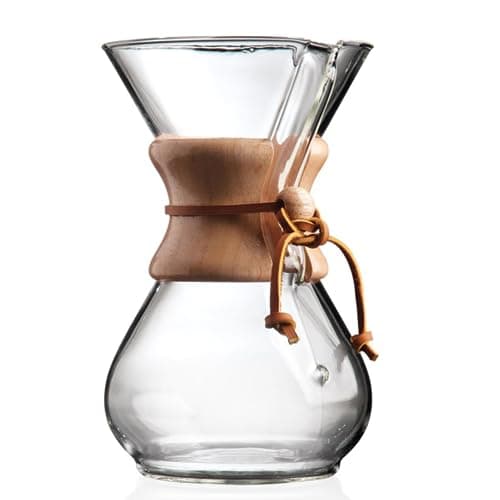
Reason three: the plastic."Moccamaster alternative no plastic" is one of the top variants of this search, and it deserves a straight answer rather than a machine recommendation. Every automatic brewer on this page, the Moccamaster included, has plastic somewhere in the water path or the brew basket — it is how automatic brewers are made at any price. If plastic-free is a firm requirement, the answer is a manual brewer: borosilicate glass, a wood collar and a paper filter, with nothing else in contact with the coffee. That is the Chemex, and it is on this page for exactly that reason even though it is not an automatic machine. The trade is explicit: you boil the water and pour it yourself. Our best pour over brewers roundup has the all-metal options too, and drip vs pour over is the honest comparison of the two workflows.
Reason four: you searched for a carafe or a shower head.If that is you, you do not want a different machine — you want a part, and you should buy the part. This is worth saying because it is a point in the Moccamaster's favor and not in ours: the machine is designed to come apart, Technivorm sells replacement carafes, brew baskets, outlet arms and filter holders, and a repaired Moccamaster is cheaper than any machine on this page. Replace the part, keep the brewer, and come back here if it ever stops being worth repairing.
One fact to carry into the picks below.SCA certification is the only independent evidence of brewing performance that exists in this category, and it is not widely held. Of the six picks here, exactly one — the Café Specialty Grind and Brew — is on the SCA's certified list. Braun's certified machine is the MultiServe Plus, not the BrewSense below; Breville's is the Luxe Brewer, not the Grind Control; the Kenmore and the Ninja are not certified at all. Those four are still good machines and we rank them on what their listings actually specify, but we are not going to imply a certificate none of them holds.
What SCA certification actually tells you, and what it does not
The Specialty Coffee Association certifies a short list of home brewers, and its own description of the program is that certified machines meet its standards for brewing quality, consistency and performance. In practice that means the machine has been tested to reach and hold the brewing temperature window — roughly 195 to 205°F — and to distribute water evenly over the coffee bed for the whole brew. Those two things are what separate a $30 machine from a $300 one, because they are invisible from the outside: a cheap brewer that dribbles 175°F water onto one spot in the basket produces flat, sour coffee from beans that would have been excellent. What certification does not tell you is anything about convenience, durability, carafe type, grinder quality or whether you will like the machine. Several machines on this page are not certified and are still the right buy for the person they are listed for.
The hotplate is the thing nobody mentions
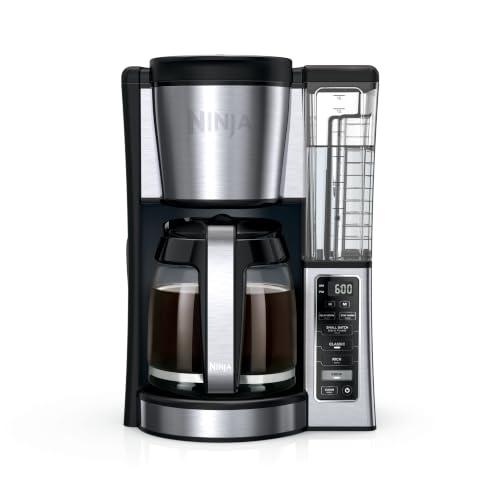
The Moccamaster KBGV's SCA entry specifies a glass carafe with a hotplate, and so do three of the picks here. A hotplate keeps the pot hot by continuing to apply heat to coffee that has already finished extracting, and the result is the stewed, bitter, flat-tasting second cup that most people blame on the beans. A double-walled vacuum thermal carafe solves it by insulating rather than heating, which is why the Café Specialty leads this page and why it is worth paying attention to carafe type at all. If you are keeping a hotplate machine, the practical fix is free: brew what you will drink in the next twenty minutes rather than a full pot, and switch the plate off.
Spend the difference on a grinder, not on a brewer
If you are replacing a Moccamaster to save money, the single best use of the difference is a burr grinder, and it is not a close call. Grinding to order is the largest available improvement in home coffee at any budget, because ground coffee begins losing its aromatics within minutes while whole beans hold them for weeks. A cheap certified-grade brewer fed month-old pre-ground will lose to a $90 machine fed coffee ground thirty seconds ago. Our best coffee grinders under $100 page is the right starting point, and best grinders for drip and pour over is the filter-specific ranking. The beans matter too, and in the same direction: best whole bean coffee ranks bags on cost per pound and on how long they stay sealed.
Grind-and-brew: the honest trade
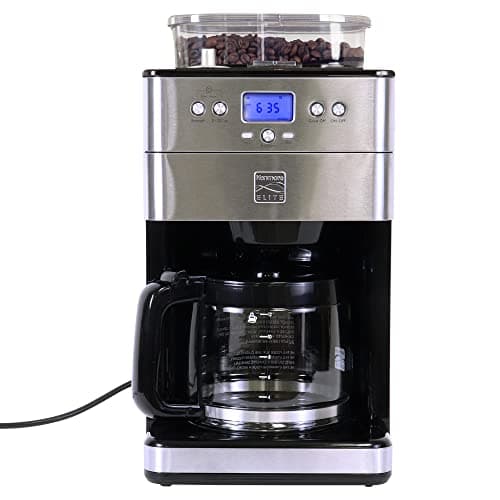
Three picks here have a grinder inside the machine, which is the most common upgrade path away from a Moccamaster. The case for it is counter space and one fewer thing to operate. The case against it is that you are buying a mid-grade grinder you cannot upgrade, a grinder fault becomes a machine fault, and the chute needs cleaning on a schedule — more so with oily dark roasts. The Kenmore's grind-off switch is the mitigation to look for: a machine that still brews pre-ground if the grinder ever fails is a materially safer purchase than one that does not. Best coffee makers with a grinder goes through the field properly, and burr vs blade explains why a built-in burr is worth insisting on.
If you want less machine rather than more
Not every answer to this search is another appliance. A Chemex is on this page because the plastic-free search has no automatic answer, but it is also the right answer for people who want fewer things on the counter, no descaling, and nothing that can fail. The honest cost is attention: a manual brew wants a controlled pour from a gooseneck kettle and about three minutes of your morning. Drip vs pour over is the full comparison, best pour over brewers ranks the cones including the all-metal ones, and Keurig alternatives covers the same exercise from the opposite end of the market.
Sizing: the carafe number is not the useful number
The Moccamaster is a 40 oz (1.25 L) machine and most of the alternatives here are sold as 10 or 12 "cups", which is not the same measure — a brewer "cup" is usually 5 to 6 oz, not 8. The number that matters is how small a batch the machine brews well, because an under-filled basket is the most common cause of bad coffee from a good machine: a dose meant for 50 grams of coffee spread thinly as 15 grams extracts unevenly and tastes thin. The Moccamaster handles it with a half-carafe switch, the Ninja with a small-batch setting and the Kenmore by grinding for a chosen cup count. If you mostly brew one or two cups, that feature matters more than the maximum capacity does — best coffee makers for one person is the page for that case, and best large-capacity coffee makers for the other end.