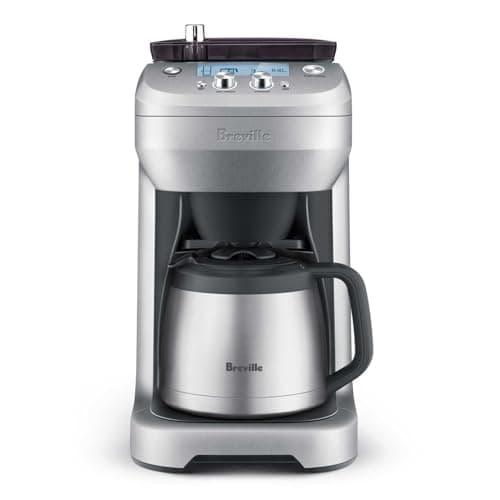
Our pick is the Breville Grind Control— twelve cups, a built-in grinder with separate grind and strength controls, and a thermal carafe, which is the combination that keeps the last cup tasting like the first. The Braun BrewSense is the one to buy if you want a straightforward programmable 12-cup drip machine and nothing else, and the budget pick is the 12-cup Farberware Yosemite: a stainless stovetop percolator that brews for a full table for less than the price of a carafe replacement.
Before the picks, the thing almost every large-capacity buyer gets wrong.
The number on the carafe is the least interesting spec.Nearly every mainstream drip machine claims ten or twelve cups, and a “cup” here is about five ounces rather than a mug. The real question is whether the machine can actually heat and saturate that much coffee properly, and then what it does with the result. A full carafe takes a household forty minutes to an hour to drink. On a hotplate machine, that coffee is being cooked for the whole of that hour: it goes flat, then bitter, then scorched-tasting, and the last two cups get poured away. On a thermal-carafe machine or a percolator that drops to a genuine keep-warm, it does not. That one difference is worth more than any other feature on this page, and it is why the ranking here does not follow the price order.
Big batches punish a bad grind more than small ones.A single cup forgives an uneven grind; a 70-gram dose spread across a wide flat basket does not, because the water finds the path of least resistance through a deep bed of mixed particle sizes and under-extracts the rest. This is why two of the picks here have burr grinders built in, and why a separate grinder is the single best upgrade for the two that do not — best grinders for drip and pour over has the picks, and burr vs blade explains why the supermarket blade grinder is the wrong tool for a twelve-cup pot.
Percolators deserve a serious look at this size. They are unfashionable and they are also the cheapest reliable way to put twelve cups of hot coffee on a table. A stainless stovetop percolator has no electronics to fail, no carafe to break and no filters to buy, and an electric one brews unattended and then holds temperature. The honest trade-off is in the cup: percolation recirculates already-brewed coffee through the grounds, so the result is stronger, heavier and less nuanced than filter coffee, and it turns bitter if you walk away from a stovetop pot. Our percolators roundup covers the method in full.
How we ranked.First, what happens to the coffee after it brews — thermal carafe, automatic keep-warm, or a hotplate. Second, whether the machine controls the grind, which matters more at this dose than any other. Third, whether it brews unattended. Price is the tiebreak. If you are brewing for one or two, this is the wrong page: best coffee makers for one person is the opposite end of the same question.
The short answer
Quick picks
| # | Product | Best for | Score | Price |
|---|
| 01 | Breville BDC650BSS Grind ControlThe best large-capacity machine here, and it wins on the two things that go wrong with a full carafe. First, the thermal carafe: no hotplate means the coffee is not being cooked while the household works through it, which is the difference between twelve drinkable cups and eight. Second, the built-in grinder has adjustable grind size and an independent strength control, so when a big batch tastes thin or harsh you have two separate levers to fix it rather than guessing. It also brews straight into a single mug, which means it is not useless on a day when nobody wants a pot. It is the most expensive machine on this page and it is the one we would still buy. | Best overall - thermal carafe plus real grind control | | $399.95·Amazon |
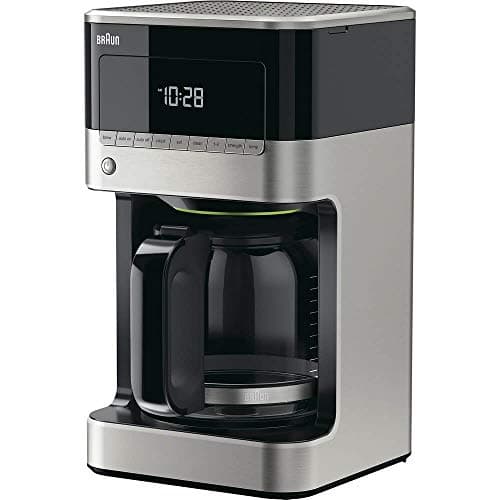
| 02 | Braun BrewSense (KF7150BK)The value answer, and the right machine for anyone who already owns a grinder. Twelve cups, fully programmable on a 24-hour timer, a regular-or-bold strength setting and a 1-4 cup small-batch mode that stops a half-pot brewing weak - which is the feature most cheap 12-cup machines leave out. It brews hotter and more evenly than most machines at its price. The compromise is the one this page cares most about: the carafe sits on a warming plate, so a pot left for an hour keeps cooking. Brew it, pour it into a thermos, and this machine costs a fifth of our top pick for a very similar cup. | Best value 12-cup drip | | $89.95·Amazon |
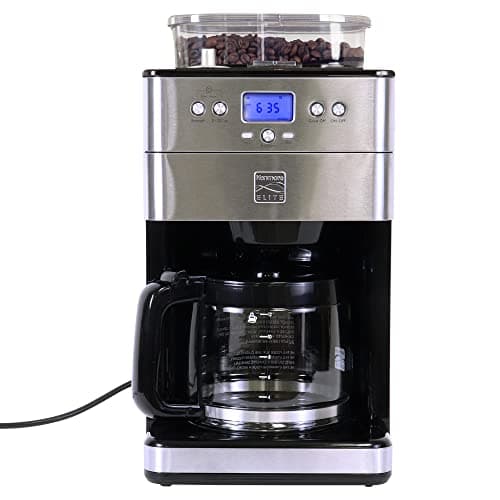
| 03 | Kenmore Elite Grind and Brew (12-Cup)The middle road: real burrs and a full twelve cups for well under the Breville. The listing specifies a burr grinder, separate grind-size and brew-strength selectors, an air-tight bean hopper and a programmable timer - which is the same feature list that makes our top pick good, minus the thermal carafe. That omission is exactly the compromise this page is about, and it is the reason this machine ranks third rather than first: a glass carafe on a hotplate undoes some of what grinding fresh achieved. If your household drinks a pot inside half an hour, it is the best value on the page. | Best burr grinder at the price | | $252.95·Amazon |
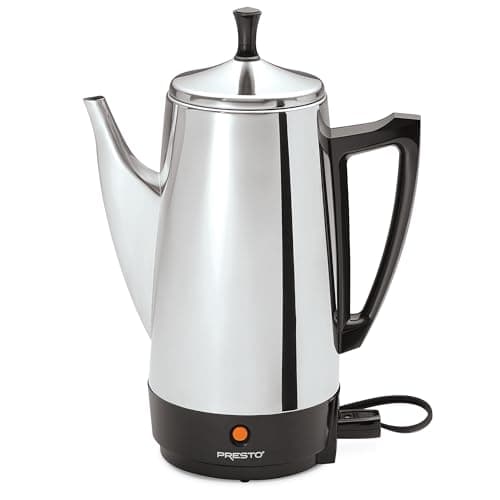
| 04 | Presto 02811 Stainless Steel Electric Percolator (12-Cup)The pick for an office, a party or a cabin, because it is the only machine here that solves the holding problem without a thermal carafe. Plug it in and it brews, senses when the coffee is ready, then drops automatically to keep-warm so it is not perking itself into bitterness while people help themselves. There is no carafe to break, no paper to buy and no hotplate under a glass jug. The honest trade is the cup: percolation recirculates brewed coffee through the grounds, so it is stronger, heavier and less articulate than filter coffee, and it rewards a coarse grind. For twelve cups that need to stay hot and drinkable for an hour, it is the practical answer. | Best for an office or a crowd | | $73.19·Amazon |
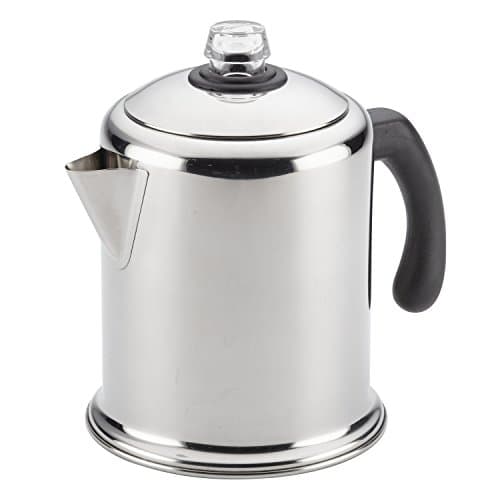
| 05 | Farberware Classic Yosemite Percolator (12-Cup)The budget pick, and the cheapest way on this site to put twelve cups of hot coffee on a table. It is the larger version of the stovetop Yosemite we rank as the best percolator overall: one-piece stainless body, a permanent basket and stem, a clear knob in the lid so you can watch it perk and pull it at the right moment, and no electronics at all. It works on any burner, including a camp stove, which no other machine here does. The trade is attention: a bigger pot takes longer to perk and it will taste bitter if you walk away from it, so this is the pick for someone who is in the kitchen, not someone programming a timer the night before. | Budget pick - cheapest route to twelve cups | | $36.99·Amazon |
#ad · Live prices from the Amazon Product API, as of November 23, 2026. Where we have no verified live price, we show none — a gap beats a number that has rotted.
In detail
The picks, in full
Best overall - thermal carafe plus real grind control
Breville BDC650BSS Grind Control
Built-in burr grinder, adjustable grind sizeIndependent brew-strength controlThermal carafe, no hotplateSingle mug through to full carafe
The best large-capacity machine here, and it wins on the two things that go wrong with a full carafe. First, the thermal carafe: no hotplate means the coffee is not being cooked while the household works through it, which is the difference between twelve drinkable cups and eight. Second, the built-in grinder has adjustable grind size and an independent strength control, so when a big batch tastes thin or harsh you have two separate levers to fix it rather than guessing. It also brews straight into a single mug, which means it is not useless on a day when nobody wants a pot. It is the most expensive machine on this page and it is the one we would still buy.
- Post-brew holding
- 9.5
- Brew quality
- 9
- Capacity & refills
- 8.5
- Ease of use
- 8
- Value
- 7
Pros
- +Thermal carafe means the last cup is not stewed
- +Grind size and strength are separate controls, which almost nothing else offers
- +Brews a single mug as happily as a full carafe
- +Grinding at brew time is the single biggest freshness win at this dose
- +Long-standing reference machine in this category
Cons
- −The most expensive machine on this page by a wide margin
- −Built-in grinders are harder to clean than a separate grinder
- −Bulky on a counter, and it needs headroom for the hopper
- −A thermal carafe pours more slowly than a glass one
- −More settings than some households will ever touch
Don't buy this if…
…you already own a good grinder. You are paying twice for grinding, and the Braun below plus your existing grinder makes a very similar pot.
Our coffee makers with a built-in grinder roundup ranks this machine against the rest of the grind-and-brew field, where the criterion is the grinder rather than the capacity.
Best value 12-cup drip
Braun BrewSense (KF7150BK)
12-cup capacityProgrammable 24-hour timerRegular or bold strength1-4 cup small-batch mode
The value answer, and the right machine for anyone who already owns a grinder. Twelve cups, fully programmable on a 24-hour timer, a regular-or-bold strength setting and a 1-4 cup small-batch mode that stops a half-pot brewing weak - which is the feature most cheap 12-cup machines leave out. It brews hotter and more evenly than most machines at its price. The compromise is the one this page cares most about: the carafe sits on a warming plate, so a pot left for an hour keeps cooking. Brew it, pour it into a thermos, and this machine costs a fifth of our top pick for a very similar cup.
- Post-brew holding
- 6
- Brew quality
- 8.5
- Capacity & refills
- 8.5
- Ease of use
- 9
- Value
- 9.5
Pros
- +Brews hotter and stronger than most machines at its price
- +Small-batch mode keeps a half pot from brewing weak
- +Fully programmable with a simple, legible interface
- +Permanent gold-tone filter and a charcoal water filter included
- +Cheapest drip machine here that handles a full 12 cups properly
Cons
- −Glass carafe on a hotplate, so the pot stews if it sits
- −Not SCA-certified, so brew temperature is good rather than guaranteed
- −No grinder, so grind quality is on you
- −Plastic housing and basket
- −Hotplate smell on the last inch of a long-standing pot
Don't buy this if…
…nobody in the house will decant the pot. A hotplate plus a slow-drinking household is exactly the failure this page is about - buy the thermal-carafe Breville.
The best drip coffee makers roundup ranks this machine on brew quality against the SCA-certified field, where capacity is not the criterion.
Best burr grinder at the price
Kenmore Elite Grind and Brew (12-Cup)
Burr grinder, grind-size selectorIndependent brew-strength selector12-cup capacity, programmable timerAir-tight bean hopper
The middle road: real burrs and a full twelve cups for well under the Breville. The listing specifies a burr grinder, separate grind-size and brew-strength selectors, an air-tight bean hopper and a programmable timer - which is the same feature list that makes our top pick good, minus the thermal carafe. That omission is exactly the compromise this page is about, and it is the reason this machine ranks third rather than first: a glass carafe on a hotplate undoes some of what grinding fresh achieved. If your household drinks a pot inside half an hour, it is the best value on the page.
- Post-brew holding
- 6
- Brew quality
- 8.5
- Capacity & refills
- 8.5
- Ease of use
- 8
- Value
- 9
Pros
- +Real burrs at the lowest price of any grind-and-brew machine we rank
- +Separate grind and strength selectors, like the much pricier Breville
- +Air-tight hopper slows staling for beans left in the machine
- +Full 12-cup capacity and a programmable timer
- +Fresh-ground coffee at this dose is a bigger upgrade than any other feature
Cons
- −Glass carafe and hotplate - the coffee keeps cooking after it brews
- −Built-in grinder is fiddly to clean compared with a standalone
- −Large footprint with the hopper on top
- −Fewer brew-temperature guarantees than a certified machine
- −Support and parts network is thinner than Breville's or Braun's
Don't buy this if…
…the pot sits for an hour. Grinding fresh and then stewing the result on a hotplate is a strange way to spend money.
Best for an office or a crowd
Presto 02811 Stainless Steel Electric Percolator (12-Cup)
Stainless steel bodyElectric, brews unattended12-cup capacityAutomatic keep-warm
The pick for an office, a party or a cabin, because it is the only machine here that solves the holding problem without a thermal carafe. Plug it in and it brews, senses when the coffee is ready, then drops automatically to keep-warm so it is not perking itself into bitterness while people help themselves. There is no carafe to break, no paper to buy and no hotplate under a glass jug. The honest trade is the cup: percolation recirculates brewed coffee through the grounds, so it is stronger, heavier and less articulate than filter coffee, and it rewards a coarse grind. For twelve cups that need to stay hot and drinkable for an hour, it is the practical answer.
- Post-brew holding
- 9
- Brew quality
- 7
- Capacity & refills
- 9
- Ease of use
- 9
- Value
- 9
Pros
- +Brews on its own and switches itself to keep-warm, so it does not over-perk
- +Stays genuinely hot for a long serving window with no hotplate scorching
- +No carafe to break, no filters to buy, nothing to go stale
- +Stainless body wipes clean and survives an office kitchen
- +No stove burner needed, unlike the Yosemite below
Cons
- −Percolated coffee is heavier and less nuanced than filter coffee
- −Needs a coarse grind or it will taste bitter and muddy
- −No grind, strength or temperature control of any kind
- −Slower to brew a full pot than a drip machine
- −Keep-warm holds temperature but does not stop coffee aging in the pot
Don't buy this if…
…you want the clarity of a filter brew. Percolation is a different drink, not a cheaper version of the same one.
Budget pick - cheapest route to twelve cups
Farberware Classic Yosemite Percolator (12-Cup)
Stainless steel, one-piece bodyStovetop (any burner, including camp stoves)12-cup capacityClear brew-view knob
The budget pick, and the cheapest way on this site to put twelve cups of hot coffee on a table. It is the larger version of the stovetop Yosemite we rank as the best percolator overall: one-piece stainless body, a permanent basket and stem, a clear knob in the lid so you can watch it perk and pull it at the right moment, and no electronics at all. It works on any burner, including a camp stove, which no other machine here does. The trade is attention: a bigger pot takes longer to perk and it will taste bitter if you walk away from it, so this is the pick for someone who is in the kitchen, not someone programming a timer the night before.
- Post-brew holding
- 5.5
- Brew quality
- 7
- Capacity & refills
- 8.5
- Ease of use
- 7
- Value
- 10
Pros
- +By far the cheapest twelve-cup brewer we rank
- +All-stainless with a permanent basket - no filters, no pods, nothing to wear out
- +Clear knob lets you watch the perk and pull it before it over-extracts
- +Works on gas, electric and camp stoves, and packs for a cabin
- +Nothing electronic to fail, which is why these last decades
Cons
- −Needs watching - leave it on the heat and it turns bitter
- −A 12-cup pot takes a while to come up to perking temperature
- −Thin base can run hot fast on a powerful burner
- −No keep-warm, so it cools once it is off the heat
- −Percolated coffee is strong and heavy rather than clean and bright
Don't buy this if…
…you want to wake up to coffee already made. This pot needs a person and a burner; the Presto above needs an outlet.
What a “cup” means on a carafe
A coffee-maker cup is roughly five ounces, not a mug. A twelve-cup machine brews about sixty ounces, which is five twelve-ounce mugs with a little left over — so a household of three heavy drinkers is a twelve-cup household, not a four-cup one. Work out the number of mugs you actually pour in a morning before you shop, because the gap between the marketing number and the mug number is where most disappointment with these machines comes from.
Thermal carafe, keep-warm, or decant
There are three honest answers to the holding problem and only one of them is free. A thermal carafe is the best: no heat is applied, so the coffee ages slowly rather than cooking. An automatic keep-warm, as on the Presto, holds a serving temperature without continuing to brew. And a hotplate — the default on most cheap large machines — is actively bad for anything left more than twenty minutes. If you buy a hotplate machine anyway, the fix costs nothing: pour the pot into a vacuum flask the moment it finishes brewing. That single habit turns the Braun into a machine that behaves like our top pick.
Dose and grind at twelve cups
A full twelve-cup brew wants something in the order of sixty to seventy grams of coffee, and that is a lot of bed depth for water to travel through evenly. Two things matter more here than at single-cup scale: grind consistency, because a mixed grind channels badly in a deep bed, and grind size, because too fine a grind in a big basket chokes and over-extracts. Start a notch coarser than you would for a small batch, and weigh the dose rather than scooping it — coffee to water ratio is the arithmetic, and a cheap scale is the tool.
Why there is no SCA-certified machine on this page
The certified brewers we rank — the Technivorm Moccamaster and the Bonavita, both on best drip coffee makers— top out around eight to ten cups, which is deliberate: hitting the certification's brew-temperature and contact-time windows gets harder as the batch grows. If outright cup quality matters more than volume, buy a ten-cup certified machine and brew twice. If volume is the requirement, the machines on this page are the honest options, and the gap in the cup is smaller than the gap in the price.
The office case
For a shared kitchen, the thing that actually fails is not the brew, it is maintenance: nobody descales, nobody washes the carafe, and a glass jug gets left on a hotplate all afternoon. That is why the stainless electric percolator is the pick we would put in an office over any drip machine — fewer parts, no carafe to crack, no filters to run out of, and a keep-warm that does not scorch. If the office wants espresso instead, best espresso machines for the office is a different and much more opinionated page.
How we picked
We did not lab-test this gear
Everyone in this category says they tested twenty machines. We have not pulled shots on every product here, and we say so. What we did instead: compiled the published specifications, cross-checked the manufacturer manuals, computed the running cost (wattage to energy, grams-per-shot to cost-per-cup), weighed aggregated owner reports, and scored each product against a published rubric. The scores are judgments from documented research — not measurements we took, because we do not have a test lab and we will not pretend we do. Where hands-on time would tell you more than a spec sheet, we flag it. Where a number came from someone else's work, we name them in Sources.
Questions
Frequently asked
What is the largest capacity coffee maker worth buying?+
For a home kitchen, twelve cups (around sixty ounces) is the practical ceiling, and all but one of the picks here hit it. Above that you are into commercial urns, which brew well but are a different category of appliance. Our top pick at that size is the Breville Grind Control, because it pairs twelve cups with a thermal carafe; the cheapest is the 12-cup Farberware Yosemite stovetop percolator.
Does a thermal carafe really make a difference?+
Yes, and at this capacity it is the single biggest difference on the page. A full carafe takes most households around an hour to drink. On a hotplate, that coffee is held at brewing temperature the whole time, which drives off aromatics and turns the pot flat and then bitter. A thermal carafe applies no heat, so the coffee cools slowly and ages rather than cooks. If you buy a hotplate machine, decanting into a vacuum flask gets you most of the same benefit for nothing.
Is a percolator a good choice for a large pot of coffee?+
For volume, hot holding and reliability, yes — it is the cheapest dependable way to serve twelve cups, with no carafe to break and no filters to buy. For cup quality, no: percolation recirculates already-brewed coffee through the grounds, which makes a stronger, heavier and less nuanced drink than filter coffee, and it goes bitter if over-perked. Our
percolators roundup is honest about both halves of that.
How much coffee do I use for a 12-cup pot?+
Around sixty to seventy grams of coffee to sixty ounces of water, which is roughly a 1:16 to 1:18 ratio by weight. Scooping is where most big pots go wrong, because a scoop of coarse coffee and a scoop of fine coffee are different doses.
Coffee to water ratio has the full arithmetic, including what to change if the pot tastes thin or harsh.
Should I buy one 12-cup machine or brew twice on a smaller one?+
If cup quality is the priority, brew twice. The SCA-certified machines we rank top out around eight to ten cups because hitting the temperature and contact-time windows gets harder as the batch grows, so a certified ten-cup brewed twice beats most twelve-cup machines in the cup. If the point is serving a table or an office in one go without standing over it, buy the capacity — that is what this page is for.
Receipts
Sources
We do not run a testing lab, and we do not pretend to. Where a measured number came from someone else's work, we name them and link them. Where we could not verify something, we say so on the page rather than quietly leaving it out. Read our full method.