A great office espresso machine is not the same as a great home one, and choosing as if it were is how offices end up with an expensive machine nobody touches. At home you optimize for the shot. In a shared kitchen you optimize for everything around it — how little effort a drink takes when ten different people make one, how quickly the milk system cleans when nobody owns the cleaning, how small a mess it leaves on a shared counter, and whether it can survive being used all day by hands that have never dialed in an espresso. Rank on those things instead of on pure espresso quality and a clear pattern emerges: for most offices, a one-touch super-automatic is the right machine, and the fussier, more hands-on machines are the exceptions that need a reason.
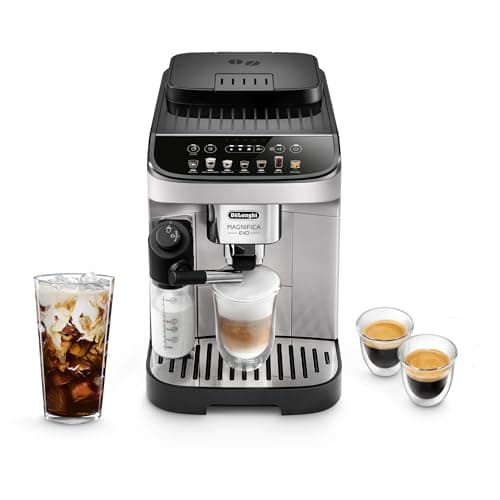
Every machine on this page is a countertop machine that plugs into a normal outlet and fills from its own water tank — none of them needs plumbing, so you can put one in a kitchenette without calling a contractor, which is exactly what most offices need. Our top pick and Best for the Office winner is the De'Longhi Magnifica Evo, a bean-to-cup super-automatic that grinds, brews and froths on one button and rinses itself between users; read the full De'Longhi Magnifica Evo review for the deep dive. If you want to see the wider field of one-touch machines it leads, our best super-automatic espresso machines roundup ranks them in full.
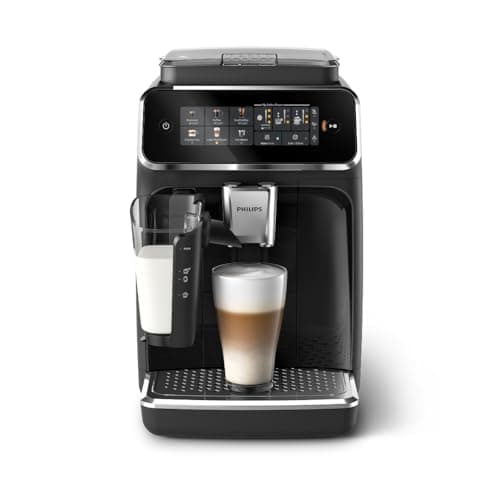
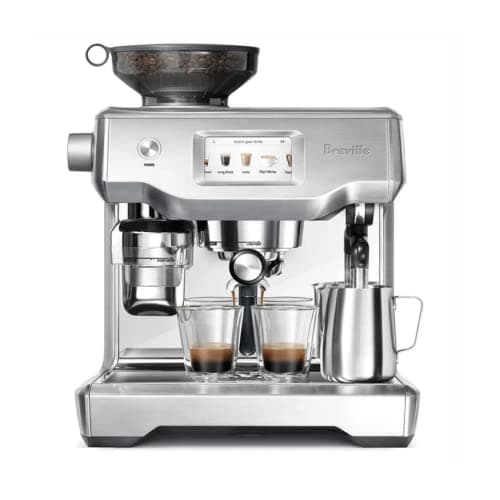
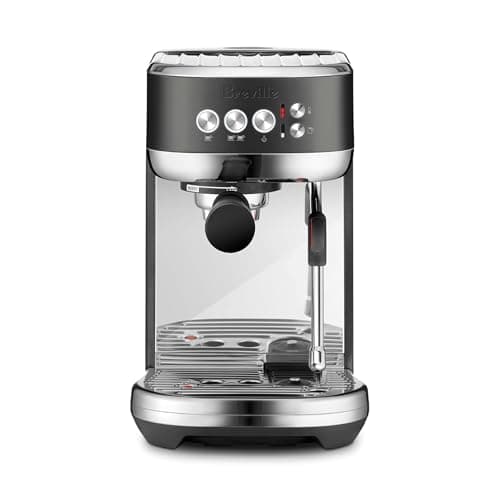
Two honest notes shape the whole list, and we would rather say them up front than sell around them. First, super-automatics — the Magnifica Evo and the Philips 3300 LatteGohere — suit most offices best, precisely because a sealed brew group and a one-touch milk system remove the two things a shared machine gets wrong most often: technique and cleaning. Second, the two machines with a portafilter earn their place with caveats we will not bury. The Breville Oracle Touch is a genuine splurge that only makes sense for a design-led or executive office, and the Breville Bambino Plus needs a separate grinder bought and maintained alongside it. The five are ranked best-first for a shared office; where your team lands depends on budget, counter space and how much milk you actually drink.
How we picked
Every machine here is a real, currently-purchasable countertop machine that a shared office can actually run, and we ranked them for the office buyer rather than the home enthusiast. That changes the priorities: the shot still matters, but it is not the top of the list. Because a shared machine is used by many hands and owned, in practice, by none of them, we weighted the order like this.
- Low-effort daily operation. How little a colleague has to know to get a good drink. One-touch bean-to-cup machines score highest here because they hide grinding, dosing, tamping and timing behind a button; a machine that needs technique will be used badly, or not at all, by most of an office.
- Easy cleaning. The single biggest reason an office machine gets abandoned. A milk system that rinses in seconds, a dry-puck bin and an automatic rinse cycle keep a machine in service when nobody owns the cleaning; a fiddly, tube-fed frother quietly kills it.
- No plumbing needed. Every pick fills from its own tank and plugs into a normal outlet, so you can put it in a kitchenette without a contractor or a water line. We deliberately left out commercial machines that need plumbing in.
- One-touch milk.Most office drinks are milk drinks, and a hands-free milk system — a one-touch carafe or an automatic steam wand — is what makes a cappuccino repeatable across a dozen different people.
- Footprint. Office counter space is finite. A machine that needs real depth and cabinet clearance is a harder fit than a compact one, so size counts for more here than it would at home.
- Shared-use durability and value.A machine used all day by many hands has to be built for it, and the running cost — filters, descaling, replacement parts — is a real line item when the whole team leans on it.
We did not lab-test these machines; we do not run a lab. The scores are editorial judgments built from published manufacturer specifications, decoded manuals and aggregated owner reports, and our methodology pagespells out exactly how. Specifications come from the makers' own product pages, listed in Sources. Prices move constantly, so we keep price talk qualitative and let the live price render inside the buy button rather than quoting a figure that could be wrong by the time you read it.
Why a super-automatic is usually the right office machine
For most offices, the honest answer is a one-touch super-automatic, and it is worth being clear about why. A super-automatic hides the entire espresso process — grind, dose, tamp, brew and, on these models, froth — behind a single button and a sealed brew group. That is a compromise at home, where an enthusiast wants control, but it is exactly the right trade in a shared kitchen, because it removes the two things a mixed group of users gets wrong most often. There is no tamping technique that ten different colleagues will each do differently, and there is no wet puck to knock into a bin that someone forgot to empty; the grounds compact into a dry puck and the machine rinses its own coffee path when it is switched on and off. You are trading the ceiling for the floor: no cup will be a revelation, but no cup will be a disaster either, which is precisely the deal an office wants. That is why the Magnifica Evo and the Philips 3300 sit at the top of this list, and why the whole category is worth understanding through our best super-automatic roundup before you commit.
The milk system is the part that gets abandoned
If you take one thing from this page, make it this: on a shared machine, the milk system is the part that decides whether the machine is still in use six months from now. Most office drinks are milk drinks, and most automatic frothers pull milk up a thin tube, through a chamber and out a spout — every one of those internal surfaces has to be flushed or it sours, and in an office, where cleaning is nobody's job in particular, that is exactly the chore that gets skipped until the machine is making black coffee only. The two super-autos answer this in different but equally office-friendly ways. The Philips' LatteGo carafe has no tube and no internal channel at all — two clip-together parts that rinse under the tap in seconds or go in the dishwasher — while the De'Longhi's LatteCrema carafe detaches whole and lifts straight into the office fridge between drinks, so the milk stays cold and out of the way. Either approach removes the friction that kills a shared frother. If milk drinks are the whole reason you are buying, our best espresso machines for lattes goes deeper on how each milk system actually performs.
Footprint, counter space and no plumbing
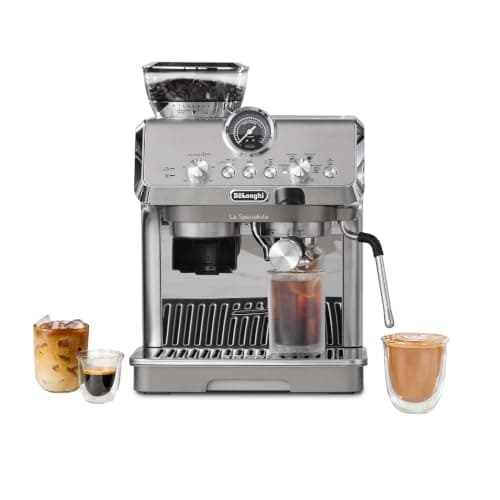
None of these machines needs plumbing, which is the first practical hurdle most offices assume they have to clear; each one fills from its own tank and runs off a normal outlet, so a kitchenette shelf is enough. What varies is how much of that shelf they eat. The compact Bambino Plus is about the width of a paperback and disappears into a corner, which is a real advantage for a small team or a tight counter. The two super-autos are mid-sized appliances that need real depth. The Oracle Touch is the largest here, with a built-in grinder, hopper and touchscreen that want counter depth and clearance under any wall cabinet — measure before you buy it. Water-tank size matters more in an office than at home, too, because the machine is used all day: the La Specialista's 2 L tank and the super-autos' larger reservoirs mean fewer trips to the sink than a compact machine's small tank, which fills and empties fast when the whole team leans on it.
The two machines with a portafilter, and their caveats
The Bambino Plus and the La Specialista are the two picks here that keep a real portafilter, and both earn their place with a caveat an office should hear plainly. The Bambino Plus makes lovely hands-free milk and pulls a genuinely good shot, but it grinds nothing — you must buy and maintain a separate burr grinder alongside it, and someone has to keep pre-ground supermarket coffee out of the equation for the espresso to be worth having. If a built-in grinder is what makes an office machine viable for you, the La Specialista folds the grinder into the body, and our best espresso machines with a grinder roundup covers that whole route. But both of these are guided or semi-automatic machines with a portafilter to knock out, which is more hands-on than a bean-to-cup; they suit a small, coffee-interested team that enjoys doing a little of the work, not a busy shared kitchen where the whole point is to press one button and walk away. Match the machine to how involved your colleagues actually want to be.
Which office machine fits you
- Want the best all-round machine for a shared office?The De'Longhi Magnifica Evo — one-touch, self-rinsing, fridge-storable milk carafe, and our Best for the Office winner.
- Want the lowest-fuss cleaning and the best value?The Philips 3300 LatteGo — a tube-free milk carafe that rinses in seconds and the fewest daily annoyances at the price.
- Fitting out a design-led or executive office and budget is open?The Breville Oracle Touch — cafe-grade drinks with almost no skill, on real dual-boiler hardware.
- Small team, tight counter, happy to run a grinder?The Breville Bambino Plus — the compact, hands-free-milk pick for a corner.
- Hands-on team that wants a built-in grinder and cold brew too?The De'Longhi La Specialista Arte Evo — the most complete guided all-in-one here.
Whichever you choose, remember what an office machine is really being asked to do: serve a crowd, day after day, with the least effort and the least mess. Rank on that and the super-automatics win for most teams; reach for the portafilter machines only when your office genuinely wants to be involved in the coffee, and budget for the grinder the Bambino Plus needs before you spend a cent on it.