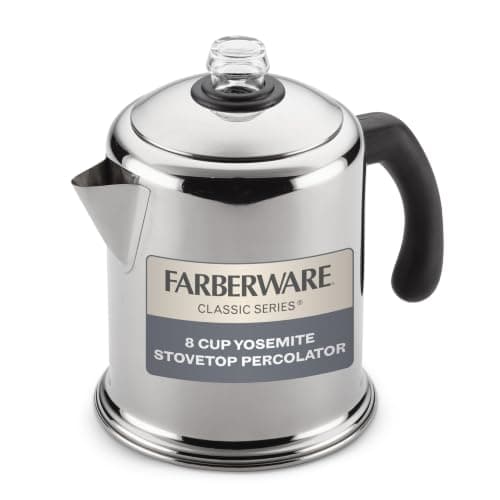
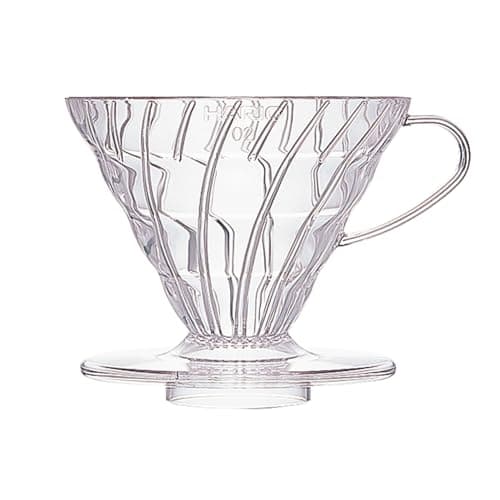
Our pick is the plastic Hario V60— the same 60-degree cone and spiral ribs as the ceramic version, in resin, for about twelve dollars. It is also the cheapest brewer on this page, which is unusual enough to say plainly: here, the budget pick and the best pick are the same object. If you want a pot rather than a cup, the stainless Farberware Yosemite percolator brews eight cups on any burner for under twenty-five dollars and will do it for decades.
Why there is no electric machine on this page.Not snobbery — arithmetic. A drip machine has to pay for a heating element, a pump or thermosiphon, a housing, a carafe, a hotplate and a control board, all inside twenty-five dollars. Something gives, and in practice what gives is brew temperature: the cheapest electric machines heat water to well under the 195–205 °F window that extracts coffee properly, so the cup comes out thin and sour no matter what beans you put in. A manual brewer spends the whole budget on the one part that touches the coffee and borrows the heat from your kettle, which is why it wins this bracket outright. The under-$100 bracket is where electric machines start making sense.
What this bracket assumes you already own.A kettle, a mug and some way to grind. The kettle can be anything that boils water — a gooseneck helps a pour-over but is not required, and our kettles page is there for when you want one. Grinding is the real constraint: a brewer this cheap will still make bad coffee from pre-ground supermarket powder, and pre-ground coffee is where most disappointment at this price comes from. If you have no grinder, best coffee grinders under $100 is a far better use of your next hundred dollars than any brewer upgrade.
How we ranked.Cup quality first, then how forgiving each brewer is of imperfect technique, then what it costs you to keep using it — because a brewer with a proprietary paper filter has a running cost and a percolator with a permanent basket does not. Capacity is the tiebreak, not the criterion: these are all small brewers and the percolator is the only one that serves a table.
The grinder problem is the whole problem at this price
Every brewer on this page is capable of excellent coffee and every one of them is defeated by pre-ground supermarket coffee, because ground coffee goes stale in days and because the grind that comes in a bag is a compromise aimed at drip machines. If your total budget is twenty-five dollars, buy one of these and accept pre-ground for now. If your total budget is a hundred, buy a brewer from this page and spend the rest on a grinder — that split produces far better coffee than a seventy-five dollar machine with pre-ground beans. Burr vs blade grinder explains why the ten-dollar blade grinder is not the answer either.
What a kettle has to do, and what it does not
For the percolator and the cezve, the heat comes from your stove and the kettle is irrelevant. For the V60, the kettle genuinely matters: pour over is steered by the stream, and a wide-spouted kitchen kettle dumps water in a way that digs channels through the bed. A gooseneck kettle fixes that, and the cheapest decent ones cost more than everything on this page — so the honest advice is to start with a steady hand and a slow pour, and buy a gooseneck kettle when the brewer has earned it. Water temperature matters less than people fear: boiled water left for thirty seconds lands close enough to the window.
Running costs, which nobody factors in
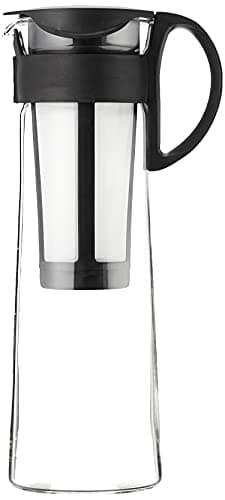
Two of these four brewers have no consumables at all. The percolator uses a permanent stainless basket, the cezve filters nothing, and both will outlive the decade. The V60 needs paper cone filters — cheap, generic and widely sold, but a real line item if you brew daily — and the Mizudashi uses a reusable mesh basket. Over five years, the paper on a daily V60 costs more than the brewer did, which does not make it a bad buy; it just means the sticker price is not the whole price.
Which of these to buy, by how you actually drink
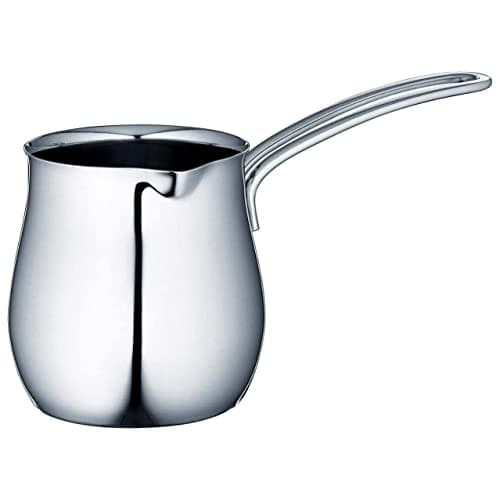
One mug, made with attention, tasting bright and distinct: the V60. A full pot for a household, no fuss, no filters: the Yosemite percolator. Iced coffee all summer, or an unreliable morning routine: the Mizudashi, because it is already made. A tiny, intense cup and a ritual at the stove: the cezve. These are genuinely different drinks rather than better and worse versions of the same one, and the brewer you will still be using in a year is the one that matches your mornings.
What the next bracket up changes
Between twenty-five and a hundred dollars you get the ceramic V60 and the Chemex, a real French press, an AeroPress, a proper moka pot and the first electric drip machines worth owning — our under-$100 page covers that field. The jump in cup quality from this page to that one is smaller than the jump from pre-ground to freshly ground coffee, which is the point we keep returning to and the one worth acting on first.
How we picked
We did not lab-test this gear
Everyone in this category says they tested twenty machines. We have not pulled shots on every product here, and we say so. What we did instead: compiled the published specifications, cross-checked the manufacturer manuals, computed the running cost (wattage to energy, grams-per-shot to cost-per-cup), weighed aggregated owner reports, and scored each product against a published rubric. The scores are judgments from documented research — not measurements we took, because we do not have a test lab and we will not pretend we do. Where hands-on time would tell you more than a spec sheet, we flag it. Where a number came from someone else's work, we name them in Sources.