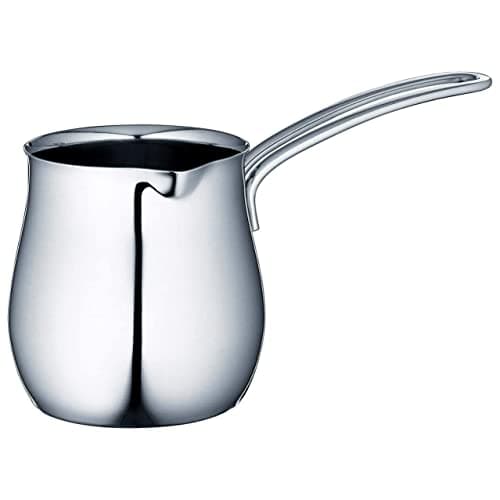
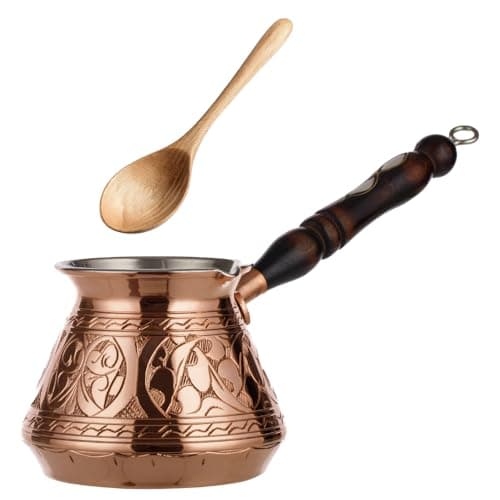
A Turkish coffee pot — a cezve, also called an ibrik or a briki— is one of the simplest brewers in coffee: a small, long-handled pot with a wide base, a tapered neck and a pouring lip. You put very finely ground coffee and cold water (and sugar, if you take it) straight into the pot, heat it slowly on the stove, and pour the lot into the cup. There is no filter and no plunger; the grounds simply settle to the bottom while you drink the rich, foamy coffee above them. That is the whole appliance.
Because the pot is this simple, here is the honest part before you spend a penny: the cezve is the least important variable in the cup. What actually decides whether your Turkish coffee is silky and foamy or gritty and thin is your grind and your patience. Turkish coffee needs the finest grind in all of coffee — finer than espresso, closer to flour or powdered sugar — and it needs to come up to temperature slowly, on low heat, so a crema-like foam builds and the grounds knit together and drop cleanly. Most people who are disappointed by their first cezve bought a lovely pot and paired it with grocery-store pre-ground coffee that was nowhere near fine enough. A hand grinder that can genuinely go extra-fine fixes far more than upgrading the pot ever will — see our best hand grinders for the ones that reach a true Turkish setting.
So what are you actually choosing between? Three things. Material: traditional copper gives the best, most responsive heat and looks the part, but it is tin-lined, wants hand-washing and is not induction-compatible; stainless steel is tougher, dishwasher-safe, and the only option that works on an induction hob. Size: cezves are sold in "cups" (tiny Turkish demitasse cups, not mugs), so you buy for how many servings you make at once. And the handle: a wood or brass handle stays cool over the flame, which matters on a pot you hold the entire time it brews. This is a different animal from a moka pot— different method, different grind, different result — and it sits at the far traditional end of the coffee makers we cover. Below are six pots worth buying, ranked, followed by how to choose and how to actually brew with one.
How we picked
Every pot here is a real, currently-purchasable cezve, and because the pot is the smallest variable in the cup, we ranked on how well each one supports the brewing method rather than on any flavor it adds. Five things decided the order.
- Heat control and response.Turkish coffee is built on slow, even heating over a low flame. A material that responds quickly and evenly — copper, above all — makes it easier to build foam without boiling over. This carried the most weight.
- Build quality. Gauge and construction: thicker copper with a proper tin lining, or solid 18/10 stainless, versus thin metal that dents and dings. A cezve is cheap enough to buy once and keep for years, so we rewarded pots built to do that.
- Handle and pour. You hold a cezve the entire time it brews, so a cool wood or brass handle matters, and a well-shaped lip lets you pour the foam into the cup without dribbling down the side.
- Everyday use. Cleaning and stovetop compatibility. Copper is hand-wash only and off-limits on induction; stainless is dishwasher-safe and, in some cases, induction-ready. We scored honestly for the hob you actually have.
- Value.What you pay for the material, size and finish you get — a budget copper pot and a premium engraved one can both score well for very different buyers.
What we didn't test
We did not lab-test these pots, and we are not going to pretend otherwise. We have not run side-by-side foam measurements or thermal-camera comparisons on a bench. Our scores are judgments compiled from published maker and reference specifications — material, thickness, capacity, handle and induction compatibility — and from aggregated owner reports, exactly as our methodology describes. Where we were unsure of an exact number, we kept the spec qualitative rather than guess. Nothing here is a measured lab result.
Copper vs stainless
This is the real decision, and it is a genuine trade rather than a right answer. Copper is the traditional material for a reason: it conducts heat quickly and evenly, so it responds to a low flame the way slow Turkish brewing wants, and a hand-engraved or hammered copper pot simply looks the part on the stove. The catches are real too. A copper cezve is lined with tin on the inside for food safety, which means gentle hand-washing rather than a dishwasher, and copper is not magnetic, so it will not work on an induction hob without an adaptor plate.
Stainless steel — the 18/10 of the IMEEA and Cuisinox — flips those trade-offs. It is tough, dishwasher-safe, has no tin lining to baby, and it is the only material here that can sit directly on an induction cooktop (though not every stainless pot is induction- rated, so check the specific model). What you give up is a little heat response: stainless does not warm as quickly or as evenly as copper, so you manage the flame a touch more carefully to build foam without boiling. Our short version: if you cook on gas or a conventional electric coil and you want the classic experience, buy copper; if you have induction, or you just want to load it in the dishwasher and forget about it, buy stainless.
Sizing (how many cups)
Cezves are sized in "cups," and the cup in question is a tiny Turkish demitasse — roughly two to two-and-a-half ounces of finished coffee, not a mug. That is why a "three-cup" pot can look small. The practical rule is to buy for the number of servings you usually make at once, and lean slightly small if you are unsure: a cezve should only be filled to the base of its neck so the foam has room to rise, so a pot that is too big for your dose actually brews worse, not better. A five-ounce pot like the Hakan is a dedicated single-serving brewer; the nine-ounce DEMMEX handles most households; a twelve- ounce BCS or Cuisinox does two or three; and the near-seventeen-ounce IMEEA is for making several cups in one go. Small batches build the best foam, so if you mostly drink alone, a small pot will genuinely give you better coffee than a big one.
The grind is the real variable (extra-fine)
If you take one thing from this page, take this: the grind matters far more than the pot. Turkish coffee uses the finest grind in all of coffee — finer than espresso, closer to flour or powdered sugar — because the grounds are never filtered out. They have to be fine enough to stay suspended long enough to extract, then settle into a firm sludge at the bottom of the cup. Too coarse and you get a thin, gritty brew with no body and mud you chew through; get it powder-fine and even a cheap cezve makes a thick, foamy, sweet cup.
The problem is that most grinders cannot reach it. Many electric grinders and nearly all blade grinders top out well short of a true Turkish setting, and pre-ground supermarket coffee is nowhere near fine enough. A good hand grinder that can dial down to a genuine Turkish fineness is the single best companion purchase for any pot on this page — our best hand grindersguide flags the ones that reach it. Pair that with fresh, dark-ish beans — the beans we recommend for espressowork well here too — and the pot becomes the easy part. To brew: dose the extra-fine coffee and cold water (and sugar) into the cold pot, stir once, and heat slowly on the lowest flame; as a foam ring forms and rises, lift it off the heat before it boils, let it settle, and return it once or twice to build the foam before pouring gently into warmed cups.
Which Turkish coffee pot fits you
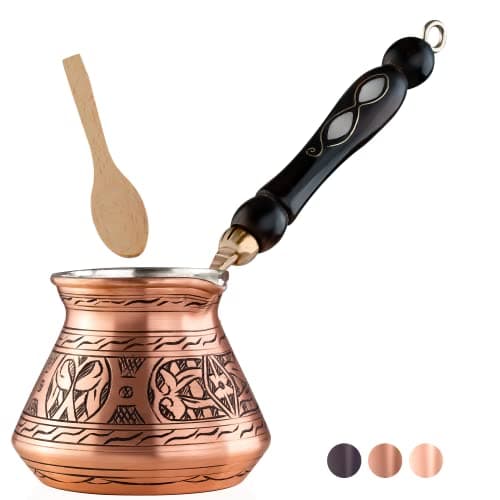
- Want the classic done properly?DEMMEX 9 oz — thick engraved copper, cool wooden handle, right size for most homes.
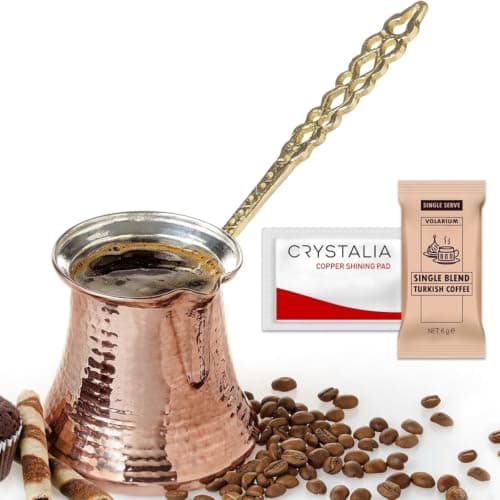
- Want real copper on a budget?Volarium hammered copper — the metal and the looks for less.
- Making two or three cups?BCS 12 oz — a larger engraved copper pot with a spoon.
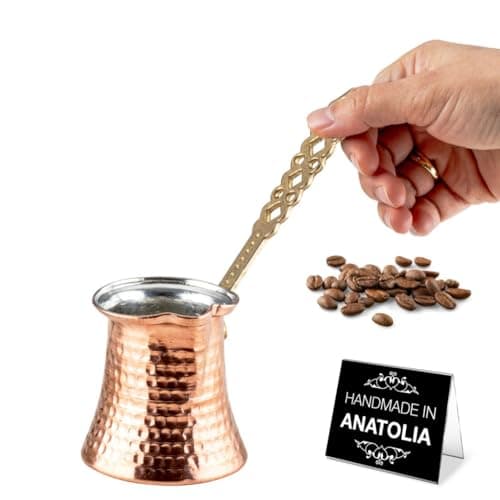
- Brewing just for yourself?Hakan 5 oz — a small copper pot that foams beautifully for one.
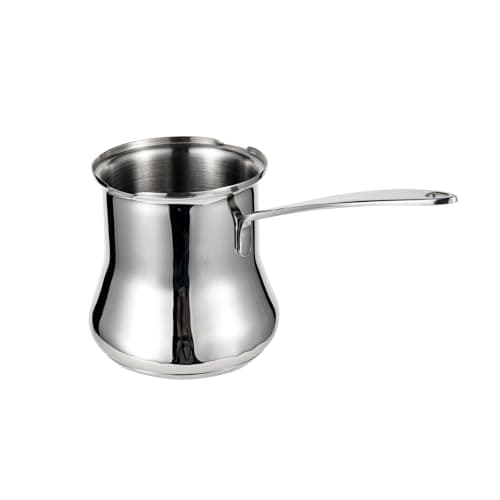
- On induction, or want it dishwasher-safe?IMEEA 16.9 oz stainless — practical, big, low-maintenance.
- Want durable stainless in a compact size?Cuisinox 12 oz — a reputable-brand everyday cezve.
Whichever you pick, spend the saved money on the grind, not the pot. A modest cezve and a grinder that goes extra-fine will beat a beautiful copper pot fed coarse, stale coffee every single time — and if you decide the ritual is not for you, a moka pot or a French press is a gentler place to start.